
I posted about the night the sheriff called my cabin. Then hundreds of hosts told me the same thing — so I went digging until I understood why a “working” detector does nothing.
“If you just read what happened in my rental, I'm not going to retell it. I want to show you the part I couldn't fit in that post — why the detector stayed silent, what other hosts found when they finally checked theirs, and the one thing I now put on the wall of every room.”
 by Sarah Mitchell · Superhost, Blue Ridge Mountains · hosting since 2016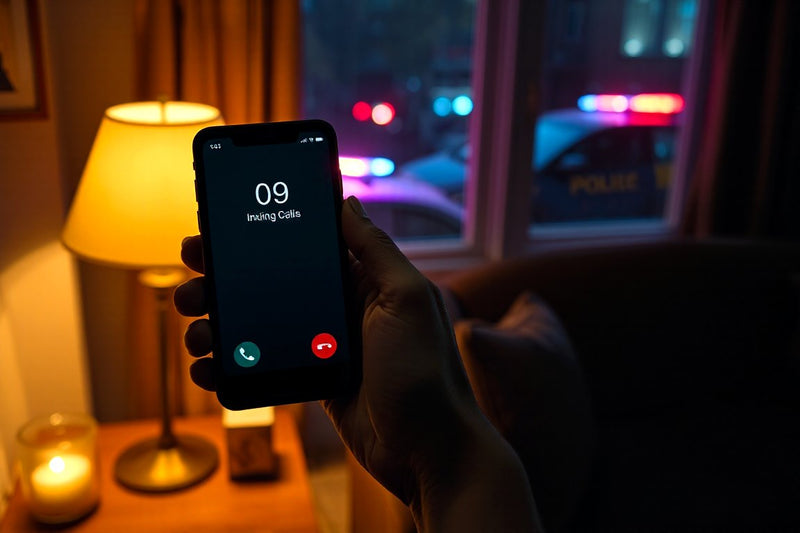
First — the part I couldn't fit in the post
If you're here, you probably just read what happened the night the sheriff called: a family of five asleep in my cabin, carbon monoxide at four times the safe limit, and a detector on the wall that glowed green and never made a single sound. I'm not going to walk you through that night again — you lived it with me once already.
Here's what I couldn't fit in that post. After I shared it, two things happened at the same time. My inbox filled with hosts saying the exact same words back to me. And I could not sleep until I understood one thing: how a detector I'd bought on purpose, tested every month, and watched pass every check could sit there silent while the air in that hallway turned poisonous.
So I spent three weeks on it. I went back to the fire marshal. I called an HVAC tech. I read the actual safety standard these things are built to. What I found is the part that decides whether your guests wake up — and almost nobody selling you a detector will say it out loud.
The green light was never a safety light
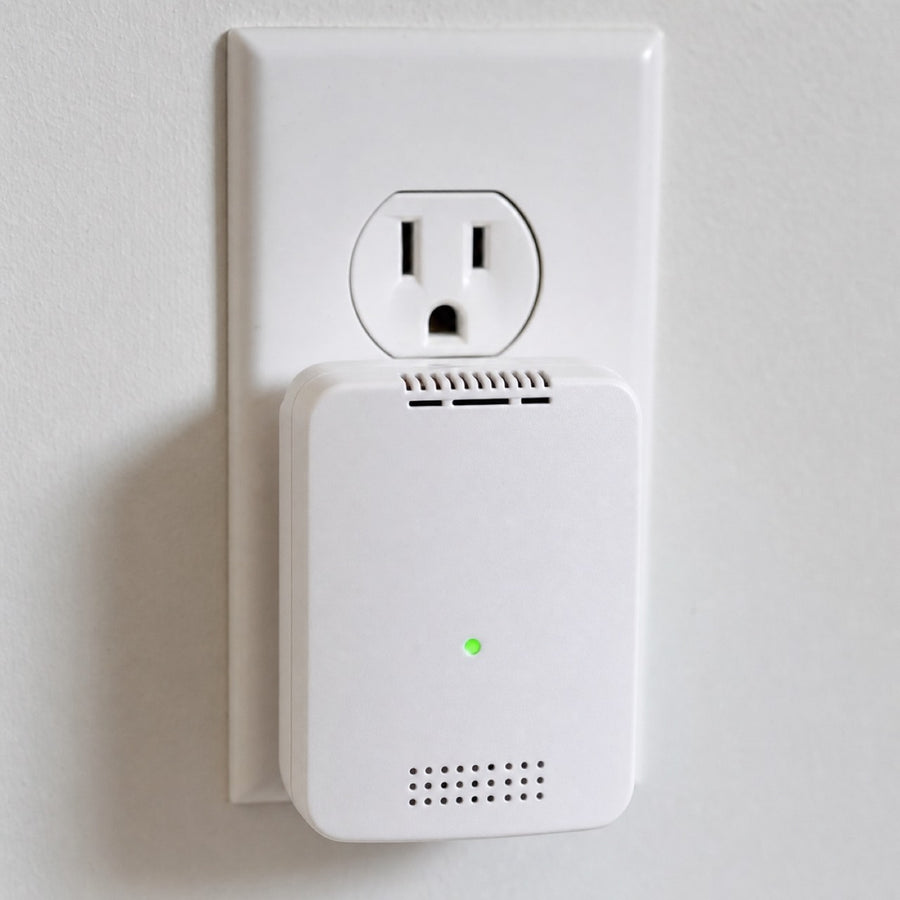
Start here, because it's the thing I had backwards for six years. A green light does not mean the air is clean. It means the unit has power. That's the whole promise it's making.
A standard CO detector is built to stay completely silent until carbon monoxide reaches 70 parts per million — and by design it can sit under that line for a long time without a peep. 70 isn't a “you're in danger now” number. As the marshal put it to me, 70 is the level where a grown adult already has a splitting headache and can't think straight. For a family asleep with little kids, by the time one of these finally decides to make noise, the people it's supposed to save can already be too dizzy to find the door.
And the test button? It checks the battery and the speaker. It does not check whether the sensor still detects gas. You can press it, hear the reassuring chirp, and be standing in front of a unit whose sensor quietly died two years ago. I did exactly that, every month, and felt responsible doing it.
That's the whole trap. The detector isn't broken — it's doing precisely what it was built to do: stay quiet under 70, and confirm it has power. We just taught ourselves that a green light means safe.
And it was deaf to half the danger in the room
Then the marshal told me the part that actually made me sick, because in six years it had never once crossed my mind. A carbon-monoxide detector doesn't watch for a gas leak at all.
My cabins run on propane — furnace, water heater, range. If a line or a fitting ever leaked the raw fuel, that CO unit would sit there green and silent straight through it, because it simply isn't built to smell gas. I'd assumed, like most hosts do, that “the detector by the furnace” covered everything in that room. It covers one of the two ways the air can quietly kill someone in their sleep.
If your place runs on gas or propane anywhere — and most cabins and older homes do — that's a second invisible failure that nobody is checking for.
Then 700 hosts told me it had happened to them too
This is the part that genuinely shook me. When I posted my story in a private group for short-term-rental hosts — a little over 22,000 of us — it went off. More than 700 comments, almost all the same handful of sentences: “I have the exact same green-light unit.” “I never once thought about the gas side.” “Why on earth is this not standard?” A Superhost named Dana up in Burlington messaged me that she'd ordered for all three of her places the night she read it.
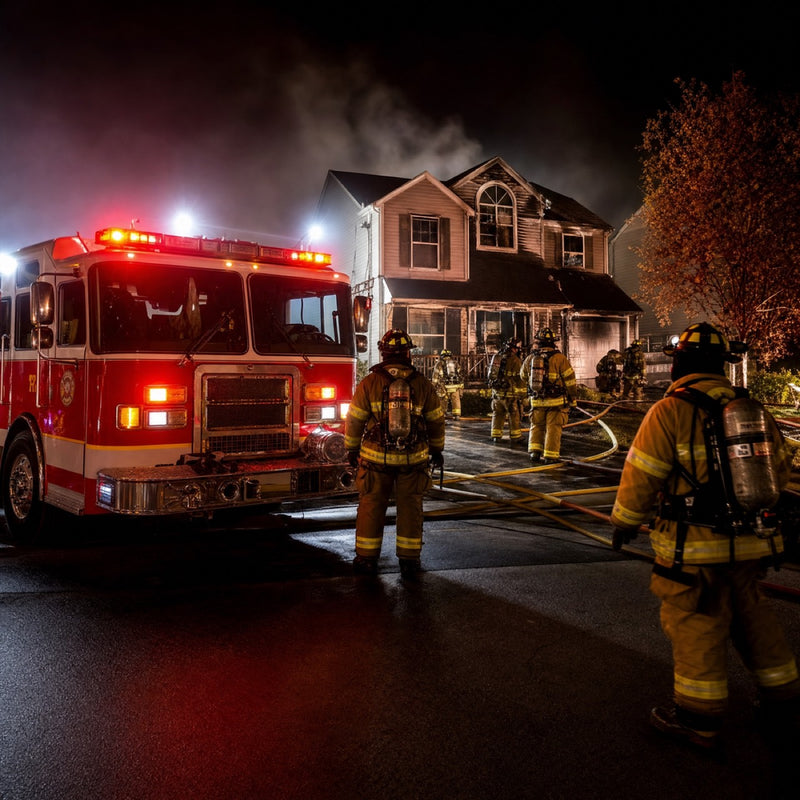
And then there was Tara, over in Gatlinburg. Same kind of cabin, same propane furnace, same off-the-shelf detector glowing green in the hallway. Except her night didn't end with a sheriff calling it “a phone call we didn't have to make.” Her guests were hospitalized. What came after — the listing suspended the moment the report hit, a certified letter from a lawyer, the word “negligence” in writing, months of not knowing what it would become — was simply the version of my night where the luck runs out.
Here's what almost no host knows until they're standing in a hallway with a fire marshal: Airbnb requires a working carbon-monoxide alarm, and many states require one by law where people sleep near fuel-burning appliances. Tara had one. I had one. We both “had a detector.” Having one, and having one that does a single useful thing before it's an emergency, are not the same sentence.
We weren't careless. We trusted the wrong thing.
I keep coming back to this, because it could have been any of us. Tara and I weren't the careless hosts. We were the 4.9s. The Superhosts. The ones who drive forty minutes because a guest said the bedroom felt a little cool. We did the responsible thing — we put a detector on the wall — and then we trusted a light that was never designed to wake anyone up.
So once I finally understood what that green light actually was, I stopped asking “is my detector working?” and started asking a better question: what do the people who walk into these rooms for a living put on their own walls?
I asked everyone who came through my door the same question
The fire marshal. The HVAC tech. The gas-company guy. Same question to each one: “Which detector do YOU trust?” Same answer, every time.
“One that shows you the actual number, in real time. The same kind of electrochemical sensor we're wearing on our belts when we walk into a scene like this. You don't want a thing that waits. You want a thing that reads.”
I didn't find it from an ad. I found it because it was the one device the professionals named without hesitating. It's called SecureBreath.
The detector that puts the number on the wall
SecureBreath does the one thing my old unit couldn't: it tells you what the air actually is. No green light to interpret — a screen, with a number, reading from zero, every second.
It's UL 2034 and ETL certified, and it uses the same kind of first-responder-grade electrochemical sensor the crew wore on their belts that night. Over 13,000 homes and hosts already run them, 4.8 stars — mostly from people who, like me, found out the hard way. Because it reads from zero instead of staying silent until 70, it alerts far earlier — around 30 PPM — while a tired family still has the strength to wake up and walk out on their own legs. And it watches for natural gas and propane too, not just CO. It plugs into any outlet in thirty seconds. No electrician, no ladder.
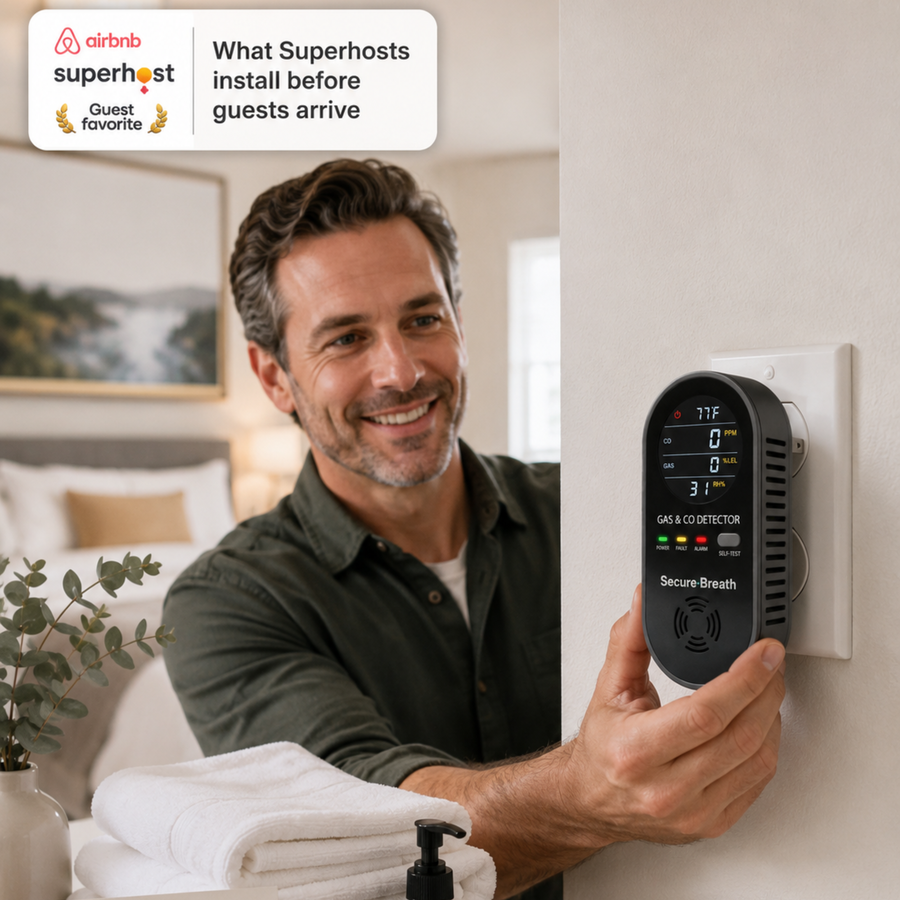
Here's the part that turned me from grateful into evangelical. I plugged the first one into that same hallway, right next to the old green-light unit, and watched. The old one glowed green, like always. The new one lit up with a number: 7.
Seven. I had been calling that hallway “safe” for six years, and it had been sitting at 7 the whole time — low, not dangerous, but never the clean zero I'd assumed. A week later another cold snap rolled in, the furnace ran all night, and the number climbed to 30 and woke me on my phone at 3 a.m. The old unit, eighteen inches away? Still green. Still silent. I now keep a running log of exactly what that hallway does on a cold night. That's the difference between a light and a number — one asks you to trust it, the other shows you the truth.
What it actually watches — all at once
SecureBreath covers every air hazard in the room at the same time:
- Carbon monoxide — read from the first PPM, not silence until 70.
- Natural gas — catches leaks at the furnace, stove and water heater.
- Propane — for the cabins and homes that run on tanks.
- Temperature & humidity — the comfort your guests actually mention in reviews.
No green-light guesswork. No blind spot on gas. The whole room, on one screen.
Why one detector was never going to be enough
The night I understood all this, I almost ordered a single unit for the hallway. Then the marshal said the thing that changed how I think about it: a number only protects the room it's in. Carbon monoxide doesn't politely stay where it starts. The furnace is in the basement; the family was upstairs; the hallway was just where mine happened to hang.
So I didn't buy one. I covered every room that matters — the bedroom hallway, the basement by the furnace, the kitchen by the range — then did the same in my second cabin. And here's the math that made it easy: it costs less than one night's booking to cover an entire cabin. A fraction of one refunded stay. A fraction of one insurance deductible. Nothing at all next to one suspended listing. As a host, “a detector” was never the job. Every room a guest sleeps in is a room I'm responsible for. That's why they sell them as a coverage set.
What a cheap green-light detector really costs a host
Most big-box stores don't even carry professional-grade detectors. The reason is uncomfortable: the cheap ones have the better margin — a few dollars to make, many times that at the register. Stores earn more on the products that protect you least.
But run the math the other way. What does a green-light box really cost you the one night it fails? A guest in the hospital. A lawyer's letter. The word “negligence.” A suspended listing. The Superhost badge, gone. A one-star review every future guest reads first. An empty calendar in your best season. Years of work undone in a single night. Next to that, covering a cabin isn't a price — it's the cheapest insurance you'll ever buy.
- Reads the air from zero — a real PPM number on a screen, not a green light that only ever meant “under 70.”
- Alerts around 30 PPM — hours before a standard unit is even required to make a sound.
- 3-in-1 detection — carbon monoxide, natural gas and propane, in one unit.
- First-responder-grade sensor — the same electrochemical sensor type the crew wore that night. UL 2034 + ETL certified.
- Plugs in in 30 seconds — any outlet, no ladder, no electrician.
The fire marshal told me something on his way out that I think about constantly: “I recommend these after every call like this one. The green-light boxes are a checkbox on a list. This is the thing that actually wakes people up.”
I'll say it as plainly as he did: a single green-light detector can cost a guest their life and a host everything they've built. That's the price nobody prints on the box. The version where you glance at a screen, see a zero, and simply know — instead of hoping — costs less than one night's booking.
Cover every room your guests sleep in
They sell SecureBreath as a coverage set now — one for every room someone sleeps in — which is exactly how I protected both cabins at once. The manufacturer only runs new batches every few months, and after a sell-out it can take weeks to restock, especially once the first cold snap hits and every host orders at the same time. Pick the coverage that matches your listings:
Each order includes: ✓ 365-Day Sleep Easy guarantee✓ Lifetime warranty + free shipping
Two futures
So let me paint you the version I have now. It's the first cold weekend of the season. Twenties at night, furnace running till morning. A family's asleep in your cabin — the good kind of guest, the kind that leaves the review that keeps your badge.
And you're asleep too. Actually asleep. Because there's a screen on the wall reading the air from zero, and it would wake them long before “too late” — and it's watching for gas, the thing you used to forget existed. Monday the five-star review comes in. The calendar stays booked. The badge stays. Not because you got lucky like I did — because you stopped trusting a green light and put a real number on the wall of every room someone sleeps in.
It comes with a 365-Day Sleep Easy guarantee — a full year to decide, every penny back — a lifetime warranty on the unit, and free shipping. The green-light box I trusted for six years came with none of that. Think about what that tells you about who's actually confident in what they're selling.
If you host — if there are people sleeping tonight in a room you're responsible for, under a green light that only ever meant “under 70” — please. Put a real one in every room this week, while it's this easy and this cheap to fix. Before it's the 1 a.m. call instead of the five-star review.
P.S. — Do one thing tonight, even if you buy nothing. Walk over to the CO detector in your rental and look at it. Does it have a screen with a number? Or just a green light? If it's only a light, you don't know what the air in that room is doing — you're trusting “under 70.” That's the whole thing I learned the hard way. — Sarah Mitchell, the host who got the phone call and got lucky.
What other hosts are saying
“Our old detector glowed green in the cabin for years. We tested it every month — always a chirp. After a guest mentioned a headache I bought SecureBreath just to prove the air was fine. The screen read 45. The old one? Still green. Still silent. I now run one in every room of both listings.”
“I've been a contractor for 30 years and I've seen too many near-misses. When my daughter started renting out her place I made her put these in every room. It's the only detector I trust, because it actually shows you the number instead of a light.”
“Three units, three SecureBreath sets. The peace of mind of glancing at my phone and seeing a real zero — instead of hoping a green light means something — is worth every penny. My guests' safety isn't a thing I want to guess about.”

Protect every room your guests sleep in
Real-time CO, natural gas & propane readings on a screen — not a green light that means “under 70.” Check today's coverage-set availability.
Check availability →Advertisement. This post is a paid advertisement, not an editorial article.
SecureBreath is a carbon-monoxide and gas detector. Always follow the included installation and placement instructions.